20% Off Any Service
Claim Offer
Best Paint For Hardie® Board And Vinyl Siding
Why Painting Hardie Board and Vinyl Siding Requires Careful Evaluation
- Factory finishes limit adhesion compared to raw building materials.
- Vinyl siding expands and contracts, stressing thin paint films.
- Hardie board surfaces vary between factory and field-altered areas.
- Repeated repainting often reduces performance instead of improving it.
How Factory-Finished Siding Responds To Paint And Coatings
Hardie® board and vinyl siding are designed to look finished when they’re installed. The color is uniform. The surface is consistent. For many homeowners near Colonia, NJ, painting these materials comes up later, usually after fading, style changes or a desire to unify additions and repairs.
What’s easy to miss is that manufactured siding doesn’t behave like wood or masonry once it’s coated. The way these materials are made affects how well paint or coatings bond and how they perform over time. Rhino Shield of New Jersey offers a house coating that protects, prevents damage and lasts 25 years.
Material Differences Between Hardie Board And Vinyl Siding
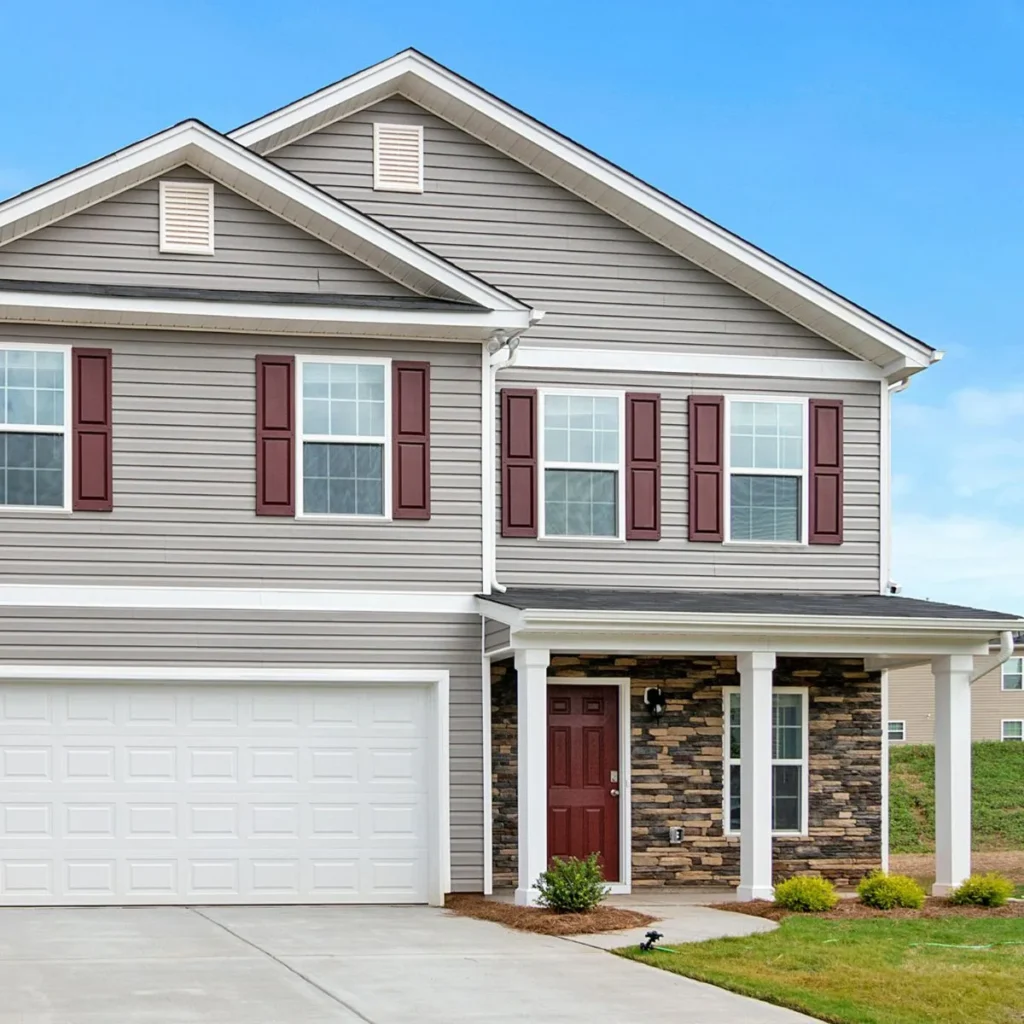
Hardie board and vinyl siding are often grouped together, but they behave very differently once painted.
Hardie board is a fiber cement product. It’s rigid, dimensionally stable and less prone to expansion than wood. Vinyl siding is lightweight and flexible, designed to expand and contract significantly with temperature changes.
Those differences matter. A coating that performs well on fiber cement may struggle on vinyl if it can’t tolerate movement. Treating both materials the same is one of the most common reasons painted siding fails early.
Adhesion Challenges On Factory-Finished Siding
Both Hardie® board and vinyl siding leave the factory with finished surfaces designed to resist wear. Those finishes are durable, smooth and consistent, which is good for longevity but challenging for adhesion.
Paint and coatings rely on surface texture and compatibility to bond properly. Factory finishes reduce porosity and limit mechanical grip. Even when surfaces are cleaned thoroughly, the underlying finish still influences how well a new coating can attach.
This is why adhesion issues on manufactured siding aren’t always visible right away. Problems often show up after exposure to sun, temperature swings or seasonal movement.
Common Issues After Painting Hardie® Board And Vinyl
When problems appear, they tend to follow material-specific patterns.
On vinyl siding, expansion and contraction can stress paint films, causing them to crack or peel. Color fade is also common when darker shades are applied to a surface that wasn’t designed to absorb heat.
On Hardie® board, issues are more often related to adhesion loss along seams, fastener lines or cut edges where factory finishes were altered during installation. Uneven wear can show up where moisture exposure varies across the wall.
These failures don’t necessarily mean the application was careless. They usually point back to how the material interacts with coatings over time.
Limitations Of Traditional Paint On Hardie® And Vinyl
Traditional exterior paint is applied thinly and relies heavily on surface bond. On materials that move or resist adhesion, that thin film has little margin for error.
On vinyl, flexibility becomes the limiting factor. On Hardie® board, adhesion consistency across factory and field-altered surfaces becomes a challenge. In both cases, repeated repainting often leads to diminishing results rather than improved performance.
These limitations are tied to material behavior, not product quality or effort.
Where Protective Coatings Perform Differently On Manufactured Siding
Protective coatings behave differently when thickness and flexibility are part of the system. Rhino Shield uses a ceramic exterior coating applied at significantly greater thickness than traditional paint.
On Hardie® board, the added thickness helps the coating maintain adhesion across seams and edges where stress concentrates. On vinyl siding, flexibility plays a larger role, allowing the coating to tolerate movement without releasing as easily as thin paint films.
RhinoShield also offers:
- UV resistance — Reduce color fading AND energy loss.
- Mildewcides — Resist mold, mildew and algae growth.
- Vapor layer — Allow moisture out and keep water from damaging your siding.
Don’t Paint Manufactured Siding, Shield It
Painting Hardie® board or vinyl siding can change the look of a home, but it also changes how those materials perform over time. The difference isn’t always obvious at first.
Rhino Shield of New Jersey helps homeowners understand how their siding is built, how it moves and what that means for long-term protection. An evaluation provides clarity before committing to a coating approach that may need to last for decades.
Schedule with Rhino Shield of New Jersey to enjoy the benefits of elastomeric coating for 25 years!
More Exterior House Painting