
20% Off Any Service
Claim Offer
Bubbling Paint In Colonia, NJ
Highlights: Why Bubbling Paint Happens On New Jersey Homes
- New Jersey’s humidity and rainfall push moisture into exterior walls, especially after storms and long wet periods.
- Older homes common across NJ use materials that absorb moisture and release it slowly, increasing pressure beneath paint.
- Multiple repaint layers over time seal moisture inside the wall instead of allowing it to escape.
- Rapid temperature changes and direct sun cause trapped moisture to expand, lifting and blistering paint from the surface.
The Real Causes Behind Bubbling And Blistering On NJ Exteriors
If you live near Colonia, bubbling paint is more common than most homeowners expect. Rhino Shield of New Jersey sees it often, especially on older homes where moisture has had decades to work its way into siding, masonry or trim.
Bubbling usually shows up after rain, humidity spikes or a hot stretch of sun. What you see on the surface is just the symptom. The real issue is what’s happening beneath the surface.
What Bubbling Paint Is Telling You About Your Exterior
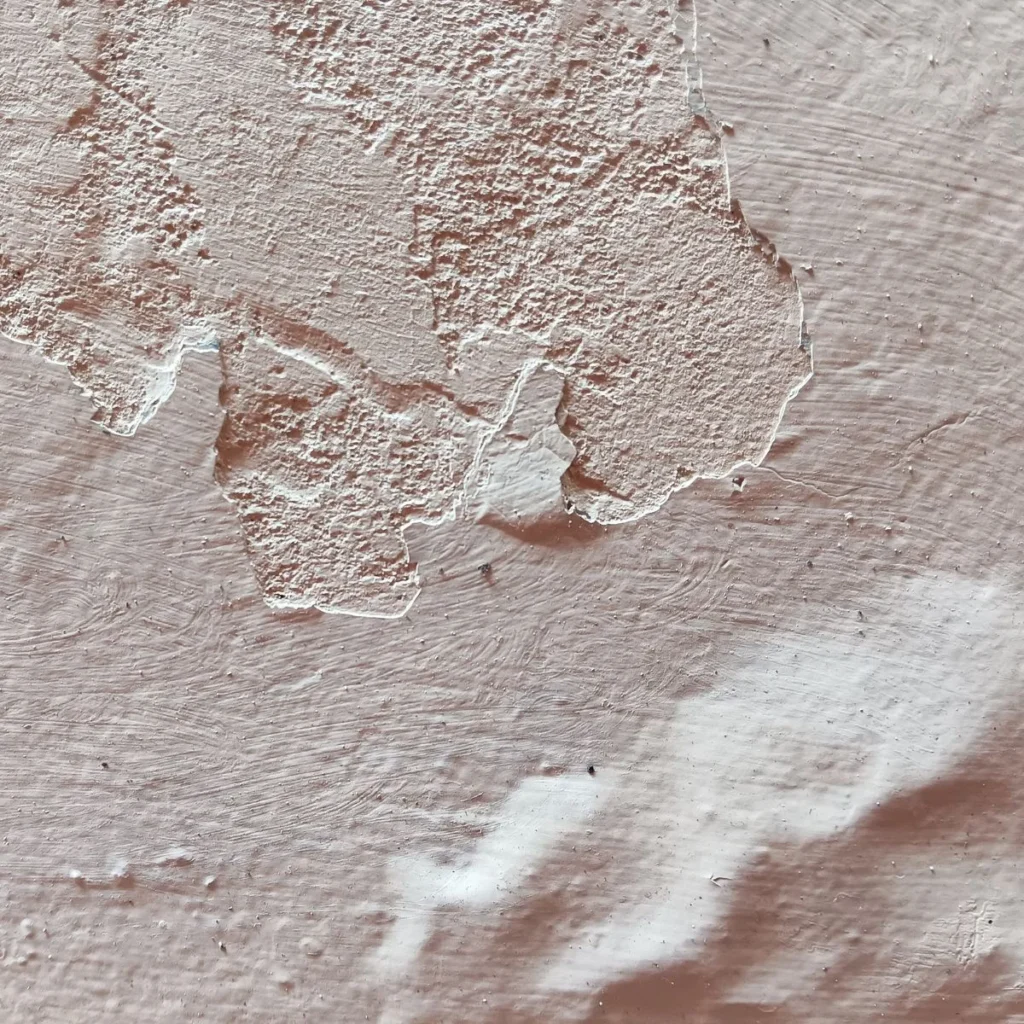
Bubbling paint forms when moisture gets trapped between the surface and the paint film. As temperatures rise, that moisture expands. The paint can’t breathe, so it lifts, blisters and eventually peels.
On many New Jersey homes built in the 1940s and 1950s, this happens for a few predictable reasons:
- Older materials absorb moisture more easily.
- Layers of repainting seal in vapor.
- Sun exposure accelerates expansion and failure.
This isn’t a cosmetic flaw. It’s a pressure problem. That distinction matters.
Common Causes Of Bubbling Paint On New Jersey Homes
Most bubbling issues trace back to a few overlapping conditions that build up over time. Moisture intrusion from rain, humidity or even irrigation soaks into exterior materials, especially when previous paint jobs weren’t properly prepped.
Thin paint films don’t have much tolerance for expansion, so as moisture and heat build, the coating starts to lift. Add steady UV exposure, which slowly breaks down the paint’s bond, and failure becomes a matter of when, not if. You’ll often notice bubbling first on south- or west-facing walls, around window trim or near foundation transitions, where moisture and heat tend to concentrate.
Why Repainting Usually Doesn’t Solve The Problem
Repainting over bubbling paint might look better for a season. Sometimes two. But the same failure almost always recurs.
Here’s why: traditional exterior paint creates a thin surface layer. Even high-end paint doesn’t change how moisture moves through your walls. Once vapor gets trapped again, the cycle repeats.
This is why many homeowners feel stuck repainting every five to seven years. The underlying conditions never changed.
How Rhino Shield’s Ceramic Coating Prevents Bubbling
In Colonia, Rhino Shield of New Jersey approaches bubbling paint differently because the product behaves differently.
RhinoShield is a ceramic exterior coating, not paint. Its formula is 8–10 times the thickness of traditional paint, forming a flexible, breathable barrier that resists moisture pressure instead of trapping it.
Key differences that matter:
- The coating allows vapor to escape without lifting.
- Thickness absorbs expansion instead of cracking.
- UV resistance prevents breakdown from sun exposure.
The result is a surface that stays bonded instead of blistering.
Exterior Coating Solutions For Moisture-Damaged Homes In New Jersey
New Jersey’s climate creates a tough environment for exteriors. Freeze-thaw cycles, summer humidity and driving rain all work against thin paint systems.
Before applying RhinoShield, surfaces are evaluated for existing damage. Minor repairs are addressed so the coating bonds to a stable substrate, not failing material.
This step is critical. Coatings don’t hide problems. They perform best when applied correctly, to the right surface, at the right thickness.
When Bubbling Is A Sign Of A Bigger Issue
Sometimes bubbling paint points to more than surface failure. Persistent moisture can indicate:
- Hidden water intrusion
- Failing stucco or masonry
- Improper drainage or flashing
That’s why inspection matters. Identifying the source of moisture helps determine whether a coating solution makes sense or if repairs should come first.
Clarity beats quick fixes.
Ready For A Long-Term Fix?
If bubbling paint keeps coming back, the problem isn’t your timing or your color choice. It’s the system on your walls.
Rhino Shield of New Jersey helps homeowners move past the repaint cycle with a ceramic coating designed to handle moisture, sun and time. The next step is understanding what’s happening on your exterior and whether a coating solution makes sense.
Start with an evaluation. Get clear answers before the next bubble forms.
More Time To Repaint?